
The Difference Between Clean and Dirty Water Pump Designs: Which One Does Your Site Need?
Sydney Central Pumps • November 17, 2026
A clean water pump and a dirty water pump can look almost identical sitting on a workshop bench. Drop the wrong one into a car park stormwater pit, though, and you'll find out the difference fast.
The difference between clean and dirty water pump designs comes down to solids. A clean water pump is built for water with little or no debris, using tight internal passages to move water efficiently. A dirty water pump has wider passages and a tougher impeller, so it can pass grit, mud, leaves and small stones without clogging.
Below, we break down how each type works, where each one belongs in a commercial or strata building, and how to pick the right one for your site.
Clean Water and Dirty Water: What's the Difference?
When pump specialists talk about clean or dirty water, they're really talking about suspended matter: the sand, silt, mud, leaves and other solid particles carried along in the flow. The more solids in the water, and the bigger they are, the more the pump has to be built around them.
Clear Water vs Contaminated Water
Clean water is water you can mostly see through, like rainwater in a tank, mains water, a swimming pool or a flooded area with no visible debris. It may carry fine sediment, but nothing chunky. A clear water pump can usually cope with slightly dirty water carrying fine silt, but not visible debris.
Dirty water carries visible contamination. Think car park runoff with grit and leaves, muddy groundwater from an excavation, or floodwater that has picked up whatever was lying on the ground.
Sewage is a separate category again. Raw sewage contains rags, wipes, sludge and organic waste that need a dedicated sewage pump, not a standard dirty water pump.
Particle Size Limits
Every pump has a rated maximum particle size for solid impurities in the pumped liquid, sometimes listed as free passage. As a general guide:
- Clean water pumps typically handle particles up to around 5 mm.
- Dirty water drainage pumps commonly handle particles from about 10 mm to 35 mm or more, depending on the model.
- Heavy-duty solids-handling and sewage pumps have larger passages again and can handle large particles, depending on the model.
These are general ranges, so always check the manufacturer's specifications for the exact pump and its intended application.
Quick Comparison
| Clean water pump | Dirty water pump | |
|---|---|---|
| Water type | Clear water with fine sediment at most | Water carrying grit, mud, leaves and small debris |
| Typical max particle size | Up to around 5 mm | Commonly 10 to 35 mm or more |
| Impeller | Closed impeller with tight clearances | Vortex, channel or open impeller with wide passages |
| Efficiency | Higher in clean conditions | Lower, traded for clog resistance |
| Typical uses | Tank transfer, irrigation, draining pools and water features | Stormwater pits, seepage, construction dewatering, floodwater |
| Risk if misused | Clogs and wears quickly in dirty water | Uses more power than needed on clean water |
Dirty Water Pump vs Clean Water Pump: Main Applications
A pump should always be chosen based on the water source and what the water is being moved for. Here's where each type fits.
Where Dirty Water Pumps Belong
- Basement and car park stormwater pits that collect grit, leaves and litter
- Groundwater seepage pits under buildings
- Construction site dewatering, where the water is muddy and full of fines
- Floodwater removal from flooded basements after heavy rain
- Lift pits and plant room sumps where debris can wash in
Where Clean Water Pumps Belong
- Transferring water between tanks
- Supplying irrigation from rainwater tanks or bores
- Draining a strata building's pool, fountain, garden pond or water feature for maintenance
- Removing clear water from flooded areas once the debris has been cleared
Where Neither Belongs
Neither pump is built for raw sewage or other wastewater with heavy solids. Sewage needs dedicated sewage submersible pumps with solids-handling impellers, such as vortex, channel, cutter or grinder designs, which we cover in our guide on how submersible sewage pumps work. Emptying septic tanks is a job for a liquid waste contractor with a vacuum truck, not a drainage pump. Water containing fuel, oil or chemicals also needs a pump with materials and seals rated for that liquid.
Dirty Water Submersible Pumps
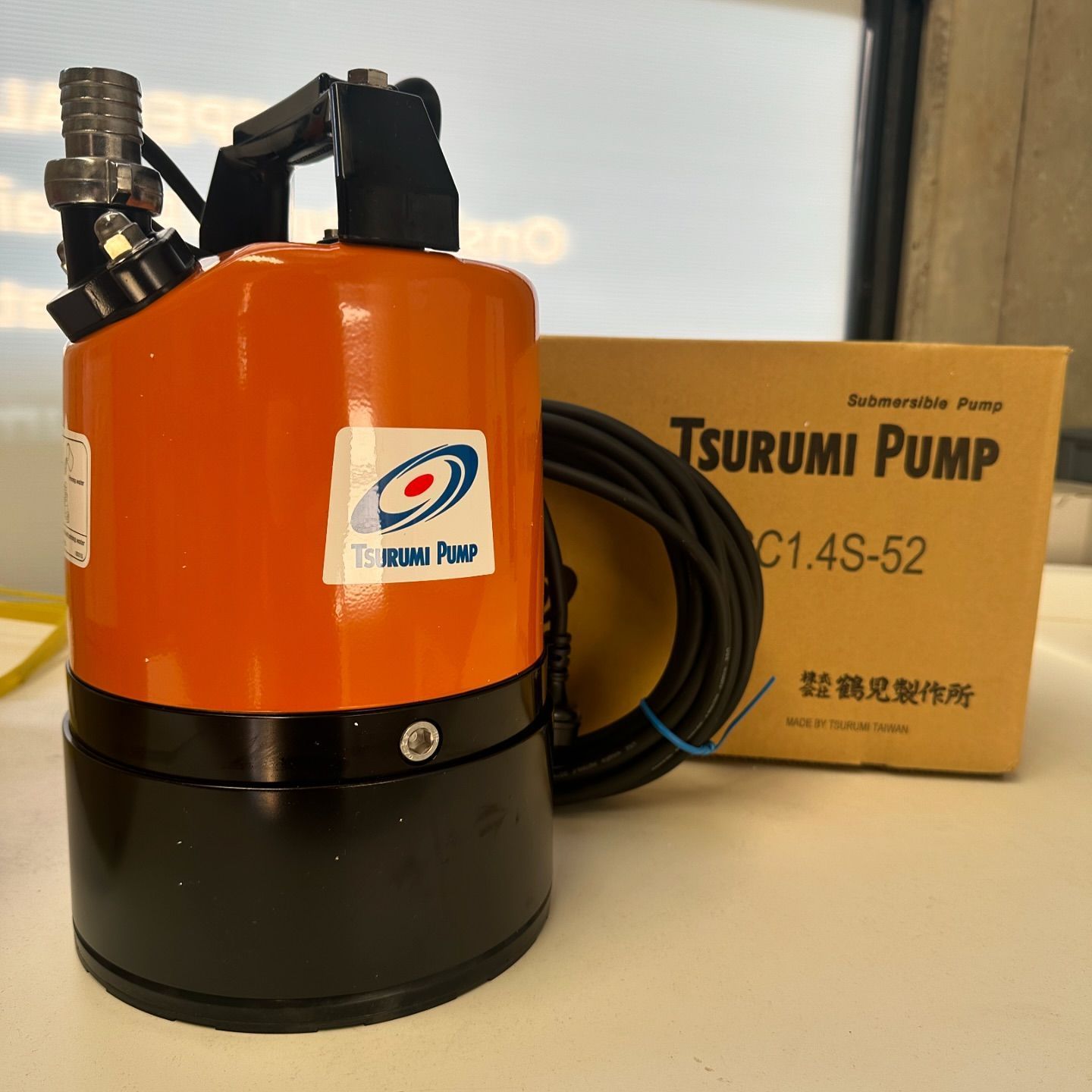
Most dirty water pumps in commercial buildings are submersible. A dirty water submersible pump sits at the bottom of a pit and switches on automatically as the water rises.
Drainage
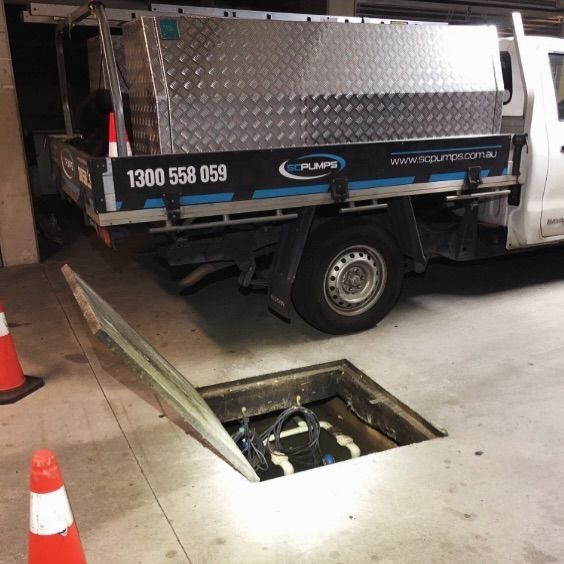
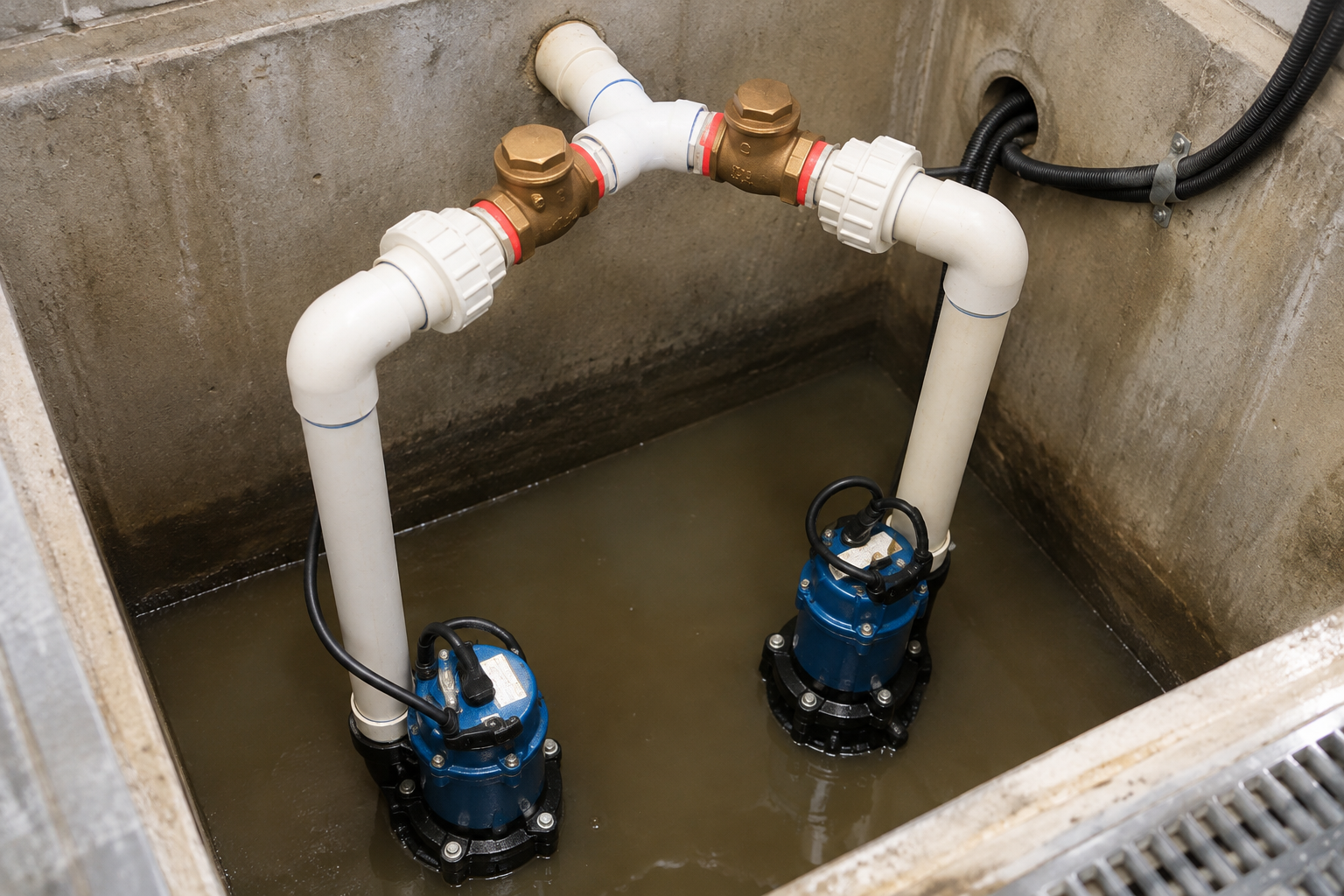
Stormwater pits under basements and car parks are the classic job. Runoff from ramps and driveways brings grit, leaves, cigarette butts and plastic, so the pump needs enough free passage to let that through. Pits that take heavy storm flows are usually set up as a full stormwater pump system with duty and standby pumps and a high-level alarm.
Muddy Water
Construction sites and excavations produce water loaded with clay, silt and sand. A dirty water submersible pump can handle water like this, but sand is full of abrasive particles, so pumps working in muddy conditions wear faster and benefit from hardened or replaceable wear parts.
Debris Handling
A dirty water pump's job is to keep moving water while solids pass through. That means wide passages to prevent clogging, an impeller that won't jam on a small stone, and an inlet that can cope with leaves without blocking. Even so, pits still need regular cleaning. No pump copes with a pit that's half full of silt.
Clean Water Submersible Pumps
Clean water submersible pumps are built for efficiency rather than toughness. They're suitable for tank and bore applications where the water is clear and the pump can be matched closely to the job.
Irrigation
Commercial sites often draw irrigation water from rainwater tanks. A clean water submersible pump sits in the tank and pushes water out to the irrigation system without needing to be primed.
Pool and Water Feature Drainage
Strata buildings with pools, fountains or ornamental ponds sometimes need them drained for repairs or resurfacing. Clean water submersible pumps empty them quickly, and many models can pump down to a very low residual water level.
Water Transfer
Transfer pumps are used for quickly moving water from one place to another, such as between tanks or from temporary storage to a discharge point. Pick one with enough capacity to empty the tank in a reasonable time.
Clear Water Limitations
The tight clearances that make a clean water pump efficient are also its weak point. Put one in a stormwater pit and grit will wear the impeller, leaves will block the inlet, and the pump will overheat or fail early. Not every pump suits every pit, so if there's any chance of debris reaching the pump, choose a dirty water submersible pump instead.
Dirty Water Pumps: Solids-Handling Design
How Large Solids Affect Pump Selection
The largest solid that could reach the pump sets the minimum free passage you need. Free passage is the largest sphere that can pass through the pump without getting stuck, usually listed in millimetres on the specification sheet.
Vortex vs Channel Impellers
- Vortex impellers sit recessed in the casing and create a whirlpool that moves the liquid. Most solids never touch the impeller, so vortex pumps are very hard to block, but they're less efficient and use more energy for the same flow.
- Channel impellers push the liquid through enclosed channels. Single-channel designs pass bigger solids, while multi channel impellers are more efficient and suit higher flows, but they're more likely to snag stringy material.
Fibrous Debris vs Compact Particles
Compact particles like sand, gravel and grit either pass through or slowly wear the pump down. Fibrous debris like rags, wipes and plastic bags is a different problem. It wraps around impellers and blocks passages. That's why a pit that collects fibrous material often needs a vortex or cutter impeller, even if the particle sizes look small.
Clean Water Pumps: Hydraulic Design
Closed Impeller Construction
Clean water pumps generally use closed impellers, where the vanes are sandwiched between two shrouds. This guides the water precisely and keeps internal losses low.
Smaller Passages, Higher Efficiency
With no need to pass solids, the internal passages and clearances can be kept tight. Less water slips back around the impeller, so more of the motor's energy goes into moving water, keeping power consumption down. Many clean water pumps are also multistage, stacking several impellers to build higher pressure, which helps on long piping runs.
Clogging Risks
The trade-off is clogging. Small passages that suit clear water block quickly when debris gets in, and sand wears tight clearances fast, so performance drops. If you're weighing up options for a pit or tank, our submersible pump services cover selection, supply and installation.
Motor Power, Flow Rate and Head Height
Flow rate and pressure, or head, are the two critical numbers when selecting any water pump. Motor power matters, but only as a means of delivering those two.
Flow Rate
Flow rate is how much water the pump moves, usually in litres per minute or litres per second. For drainage, it needs to match or beat the worst-case inflow, such as runoff from a heavy storm.
Head Height
Total head is the full resistance the pump has to overcome: the vertical lift from the pit to the discharge point, friction losses through the pipework and fittings, and any pressure required at the outlet. As head rises, flow drops, so a pump that moves plenty of water at 2 metres of head may only manage a trickle at 10 metres.
Don't Choose by Wattage Alone
Two pumps with the same wattage can perform very differently depending on their hydraulic design. A higher wattage doesn't guarantee more flow at your site's head. Choosing by wattage alone can lead to an undersized pump that can't keep up in a storm, or an oversized one that wastes power. Always check the pump's performance curve against the flow and head your system actually needs.
Materials, Seals and Operating Reliability
Build quality matters for pumps working in harsh Australian conditions: summer heat, salty coastal air, heavy storms, and long idle stretches followed by sudden demand.
Corrosion-Resistant Materials
- Plastic or composite housings suit light-duty clean water pumps.
- Cast iron is common in commercial drainage and sewage pumps for its strength.
- Stainless steel components resist corrosion, which suits coastal environments like much of Sydney, as well as pits with aggressive water.
Abrasion From Sand
Sand and grit act like sandpaper on impellers, wear rings and seals. Pumps handling muddy water benefit from impellers made from wear resistant materials or replaceable wear parts, and should be inspected more often.
Mechanical Seal Protection
Mechanical seals keep water out of the motor. Many commercial pumps use double seals with an oil chamber between them, so a worn outer seal can be picked up during servicing before water reaches the motor.
Thermal Overload Protection
Most models used in commercial buildings are equipped with thermal overload protection, which switches the motor off if it overheats, which can happen with a blockage, a jammed impeller or dry running. It's an important safeguard, but if it keeps tripping, something else needs fixing.
Installation and Maintenance Requirements
Float Switch Operation
Most submersible pumps use a float switch or level sensor. As the water rises, the float lifts and switches the pump on. As the level falls, it switches the pump off. Floats need room to move freely and shouldn't snag on pipework or the pit wall.
Dry-Running Prevention
A quality pump setup should include run-dry protection. Many submersible pumps rely on the surrounding water, or the water flowing through them, to keep the motor cool, so run-dry protection prevents motor burnout if the pit or tank runs empty. It works through the float setting, an electronic sensor, or a protection feature built into the pump or control panel.
Intake Inspection
Check the intake and any strainer regularly for leaves, plastic and silt. A partly blocked intake cuts flow and makes the pump work harder.
Cleaning After Use
Portable submersible pumps used for muddy water or floodwater should be run in clean water for a short time afterwards to flush out grit, then cleaned and dried before storage. Permanent pits need periodic cleaning to remove the silt and debris that builds up around the pump.
For fixed systems in commercial and strata buildings, a scheduled pump service and maintenance programme takes care of these checks before small problems turn into failures.
How to Choose the Right Pump
Choosing a water pump starts with matching it to the specific water source. Work through these four steps:
- Identify the water source - Rainwater tank, stormwater pit, seepage, excavation or floodwater? The source tells you how clean the water is likely to be, both now and after a storm.
- Measure the largest solid - Work out the biggest particle or piece of debris likely to reach the pump, then choose a pump whose free passage comfortably exceeds it. If fibrous debris is likely, factor in the impeller type as well.
- Confirm the flow rate and head - Calculate the worst-case inflow and the total head, then check the pump's performance curve at that duty point.
- Verify electrical compatibility - Confirm single-phase or three-phase supply, the pump's current draw and starting load, and the protection on the circuit. For safety, electrical connections should be done by a licensed electrician.
If the water could be clean today and dirty after the next storm, choose for the dirty conditions.
Cost, Efficiency and Long-Term Value
Purchase Cost
Light-duty clean water pumps are usually cheaper to buy. Heavy-duty dirty water and solids-handling pumps cost more because of their tougher construction and materials.
Energy Consumption
In clear water, a clean water pump is generally more efficient, so it uses less power to move the same volume. A dirty water pump trades some of that efficiency for clog resistance. On clean water systems that run for long periods, variable speed pumps can adjust motor speed to actual demand and lower energy costs. On drainage pumps that only run when a pit fills, the savings are usually much smaller.
Maintenance Demands
Dirty water pumps need more frequent inspection and cleaning because of the grit and debris they handle. A clean water pump used in dirty water needs even more attention, and usually won't last long.
Service Life
The biggest factor in long-term value is correct selection. A pump matched to the water, the flow and the head runs closer to its best efficiency point, wears more slowly and fails less often, which extends equipment lifespan. Brand matters too. We're an authorised Grundfos dealer, a brand known for energy efficiency and quiet operation, and our pump sales team also supplies Davey, which designs its pumps for Australian conditions, along with the other major brands.
Choosing Between Clean and Dirty Water Pumps
The difference between clean and dirty water pump designs comes down to what's in the water. Clean water pumps use closed impellers and tight passages to move clear water efficiently. Dirty water pumps use wider passages and solids-handling impellers to keep running when grit, mud and debris come through.
Pick the pump for the water you'll actually be pumping, including the worst it might look after a storm, and check the manufacturer's specifications for particle size, flow and head before you buy.
Not Sure Which Pump Your Pit Needs? Let's Take a Look
A lot of pump problems start with a pump that was never right for the job. If you manage a commercial or strata building and aren't sure your current setup suits the water it's dealing with, our team can check the site, the pit and the pump, and give you a straight answer on what it needs.
Call us on 1300 558 059 or request a quote.
Need to choose a pump for stormwater drainage? Peak inflow, head, debris, duty and standby setup and power supply all decide whether it copes in a heavy storm.
How does a stormwater pump station work under a Sydney basement car park? Follow the water from pit to pump to street drain, plus what happens when it fails.
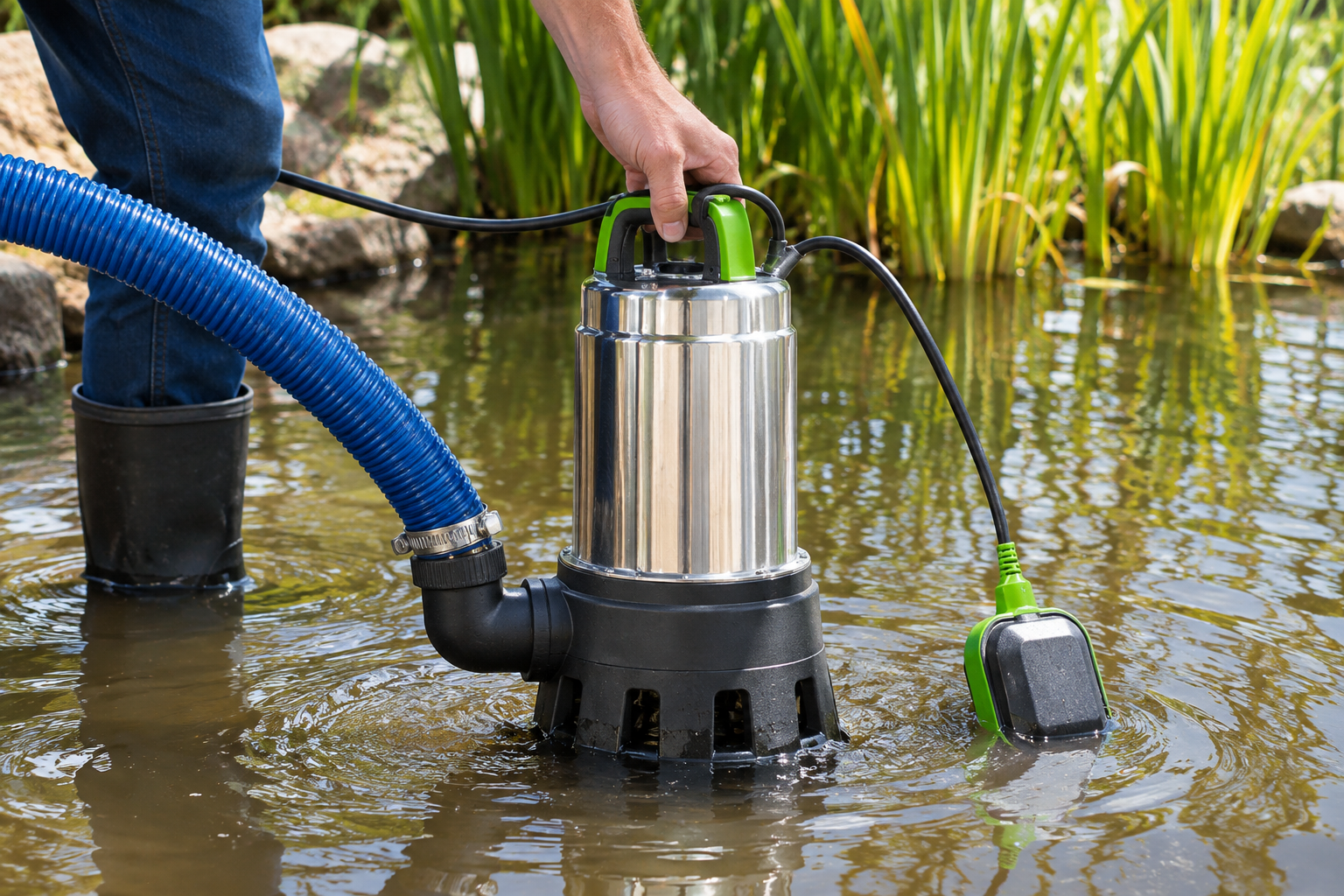
What does a submersible pump do in a strata or commercial building? Find out how it works, what's inside, where it's used and how to keep it running reliably.