
How Do Submersible Sewage Water Pumps Work?
Sydney Central Pumps • December 4, 2025
Submersible sewage pumps are some of the most important pieces of equipment in modern plumbing, waste water management and strata drainage systems. Quiet, reliable and built to handle harsh conditions, these pumps move raw sewage and liquid waste from lower areas to higher discharge points. Some systems also use submersible pumps for greywater or stormwater, depending on the pump type and pit configuration.
Despite their critical role in homes, commercial properties, industrial facilities and strata buildings, many people do not understand how these pumps work or why regular maintenance is absolutely important, especially as they handle solids, sludge and corrosive waste water that can lead to wear or blockages.
This guide breaks everything down in a clear, accessible way to help property owners, strata committees, facility managers and homeowners better understand these systems.
Whether you manage a single dwelling or a multi-storey complex, knowing how these pumps operate gives you the insight needed to choose the right pump, recognise early warning signs of problems and invest in appropriate maintenance.
What is a Submersible Sewage Pump?
A submersible sewage pump is a specialist pump that sits fully underwater in a sewage pit, pump well or wastewater tank. It forms part of a wider family of wastewater pumps that manage both raw sewage and treated effluent in different stages of a property’s drainage system.
Some sites also use submersible sump pumps for stormwater, although these are usually a different pump type. In these cases, drainage pumps may be used alongside sewage pumps to manage groundwater or excess stormwater on the property. Its purpose is to handle raw sewage, liquid waste, solids, greywater or stormwater and move it from one location to another, usually uphill to a discharge line or sewer connection.
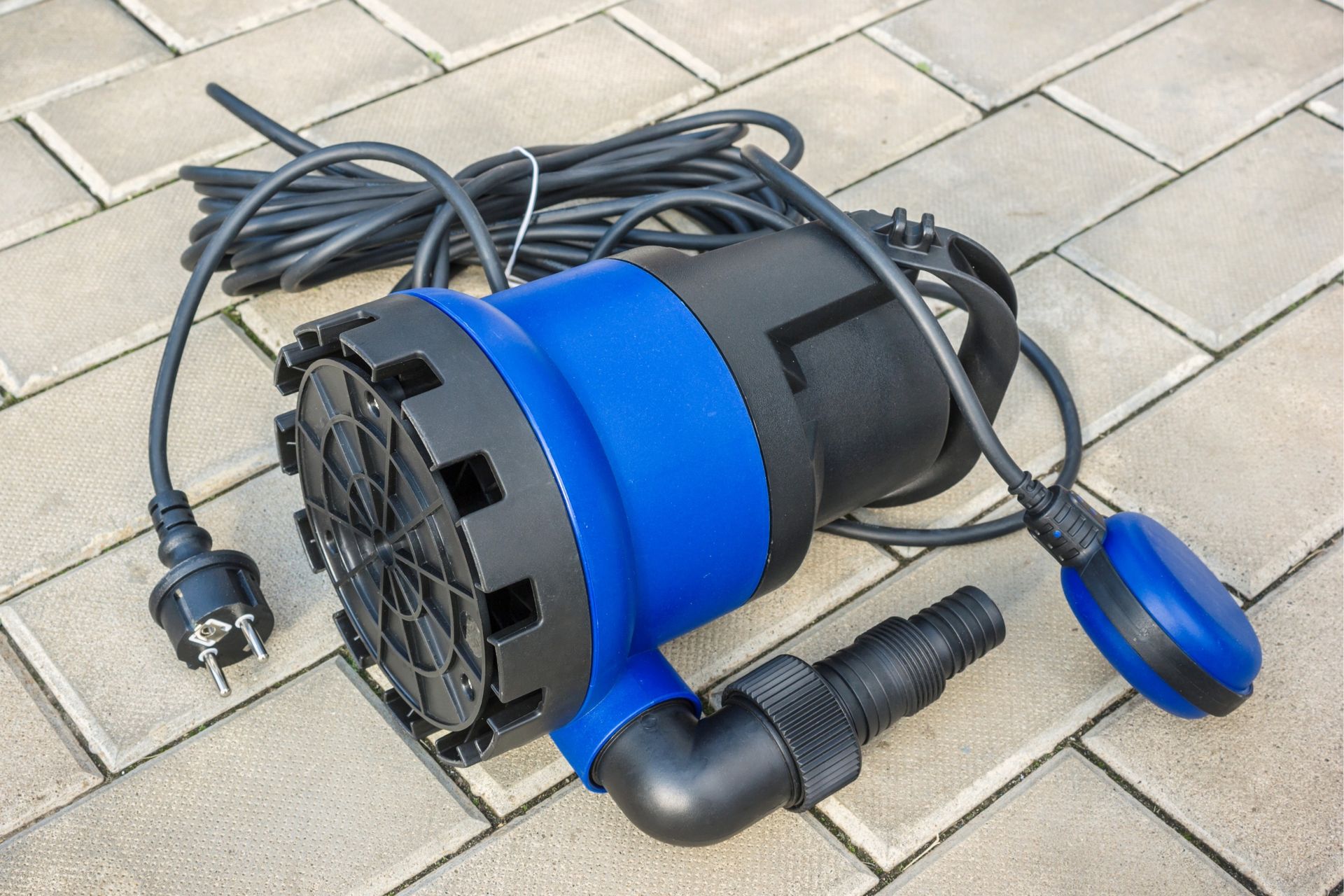
In some residential or rural setups a submersible pump is installed to transfer partially treated effluent from a septic tank or wastewater treatment unit to a higher-level or remote dispersal field or irrigation area.
Unlike surface pumps, a submersible sewage pump is designed to be sealed completely, protecting the motor and internal components while it operates underwater. These pumps are used when gravity alone cannot move wastewater where it needs to go. The submerged operation of submersible pumps helps to dissipate heat generated by the motor, preventing overheating.
Common applications include:
- Basement bathrooms and laundries.
- Below-ground toilets.
- Commercial kitchens that have drainage points below the sewer line.
- Industrial facilities.
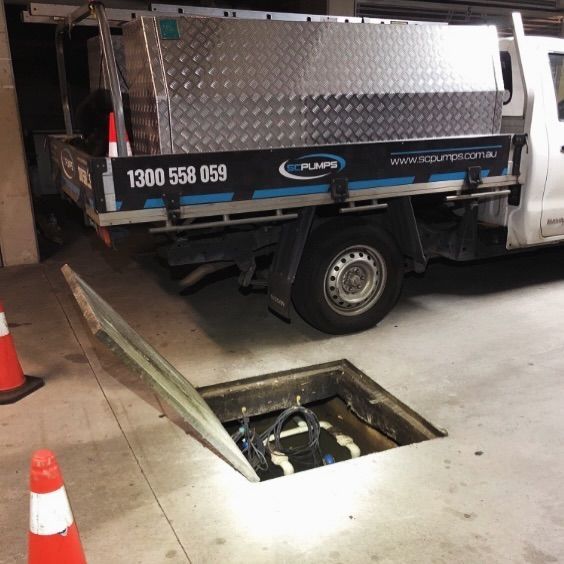
- Strata basement car parks.
- Sewage pumping stations.
- Rural or remote sites, including properties that rely on a septic tank system and need effluent pumped to a higher drainage point.
- Buildings with basement levels below the municipal sewer line. These units often work alongside other wastewater pumps installed throughout larger properties or multi-building sites.
These pumps play an important role in modern sewage systems by transferring waste from lower levels to points where gravity flow can resume.
Whenever waste water sits below a gravity-fed exit point, a submersible pump becomes essential. In some buildings a sump pump may also be installed nearby to manage groundwater or stormwater that collects around the foundation, working alongside the sewage pump to protect the property.
How Does a Submersible Sewage Pump Work?
Submersible sewage pumps operate using a simple but highly effective principle: they convert electrical energy into mechanical energy, which creates the kinetic force needed to push sewage or wastewater up through a discharge pipe until it reaches the gravity line.
The design of submersible pumps minimises energy losses associated with suction lift, making them more energy-efficient than other pumps. This focus on energy efficiency is especially important for systems that operate frequently or manage high wastewater volumes.
Lower power consumption is a major advantage in sites where pumps cycle regularly or operate for extended periods.
Here is a step-by-step breakdown of how the process works.
Step 1: Wastewater enters the pump pit or basin
Every submersible system begins with a collection basin or pit. Wastewater from toilets, sinks, showers and floor drains flows into this pit naturally through gravity. In some commercial or older combined systems, stormwater may also enter the pit, but this is not typical for most buildings. During heavy use or unexpected inflow, excess water can build up quickly in the pit, which is why the pump must activate reliably once the float reaches its trigger point.
The size of a pump pit can differ based on the type of property and the demands of the system. As a general guide:
- Domestic pits are often relatively small and may hold anywhere from a few dozen litres upward.
- Strata and commercial setups usually require larger pits that can accommodate higher volumes.
- Industrial pumping stations can be much larger again, with capacity determined by the site’s flow rates, equipment needs, and overall demand.
Once the fluid reaches a certain height, the pump activates.
Step 2: Float switches detect the rising water level
Submersible sewage pump systems use float switches to sense the level of liquid in the pit. These floats hang inside the pit and move up or down depending on the water level.
Most pits have:
- A float to start the pump
- A float to stop the pump
- A high-level alarm float
- Sometimes a backup float for redundancy
As the pit fills, the float rises. When it reaches the activation point, the switch signals the pump to turn on.
Step 3: The pump motor activates
Once the float triggers the system, the motor switches on. Commercial and industrial pumps vary widely in power output. Smaller units may start at a few kilowatts while larger solids-handling pumps can require significantly higher capacities depending on flow demands, pressure requirements, and the type of material being moved.
The motor is enclosed in a sealed housing with mechanical seals that prevent water entry, protect the wiring and keep the unit safe during underwater operation.
The motor’s shaft connects to the impeller, which rotates at high speed.
Step 4: The impeller creates centrifugal force
The impeller is the core of the pumping action. As it spins, it generates centrifugal force that pushes liquid outward into the pump volute and then into the discharge line. Submersible sewage pumps operate on the same principle as centrifugal pumps, using rotational energy to move wastewater efficiently through the system.
This centrifugal action is also used across many wastewater pumps that handle different waste streams in larger networks. However, unlike centrifugal pumps used in above-ground applications, a submersible unit performs the same process while operating fully underwater.
Different systems use different impeller designs. Vortex impellers handle large solids. Channel impellers offer efficient flow. Grinder pumps use a cutting mechanism to macerate sewage and deal with fibrous materials.
Each configuration is selected to move wastewater as reliably as possible.
Choosing the right impeller style also supports efficient operation, especially in systems that deal with varying flow rates or solids.
These designs also help the pump manage solid waste found in sewage, preventing clogs and keeping the system operating smoothly.
Step 5: Sewage travels through the discharge pipe
At this stage, the submersible wastewater pump forces the liquid upward through the discharge line. The pump forces wastewater up through a discharge pipe leading to a sewer main or onsite wastewater treatment system. Stormwater discharge applies only to sump pumps used for drainage, not sewage pumps. In basements or underground facilities, this pipe often rises several metres before connecting to a horizontal line where gravity takes over.
Step 6: The water level drops and the pump shuts off
Once enough wastewater has been removed and the float drops to its off position, the pump stops. This prevents continuous running and protects the motor.
Step 7: The cycle repeats
Whenever the water level rises, the pump activates again. This process prevents sewage overflow, protects the property and maintains a safe environment for occupants.
Key Components of a Submersible Sewage Pump System
To operate safely and reliably, each sewage pump system includes several important components. Periodic inspection of seals and internal bearings is important for reliable operation, since seals protect the motor and bearings from water ingress.
1. The Submersible Pump Unit
This includes:
- Motor
- Impeller
- Pump housing
- Pump body
- Seals
- Bearings
- Power cable
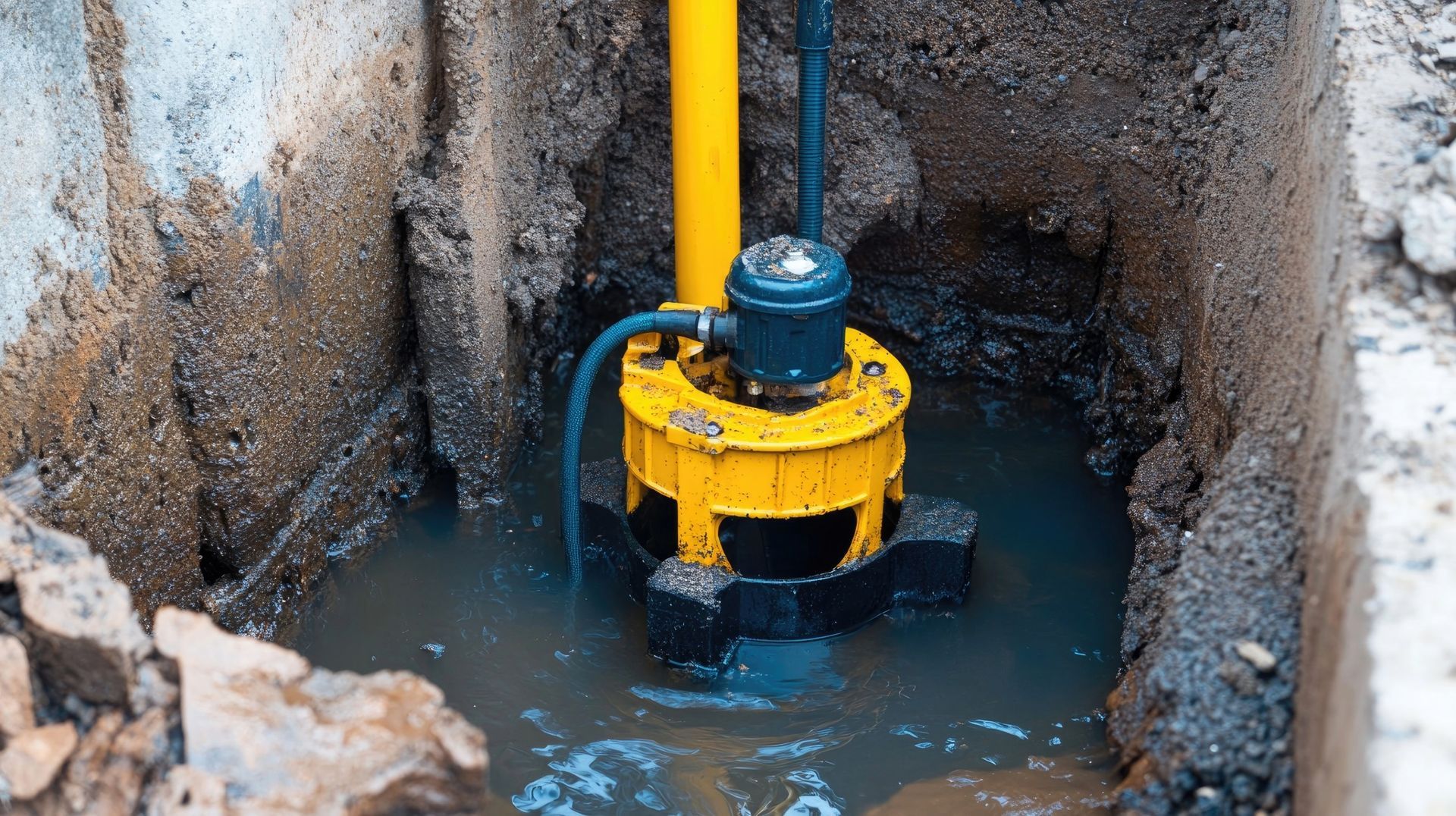
The housing is commonly made from cast iron or stainless steel, often with protective coatings. Some domestic units also use heavy-duty thermoplastic materials. These components must cope with harsh wastewater conditions, so many pump bodies and housings are built from corrosion resistant materials that handle long-term exposure to moisture, gases and abrasive solids. Investing in a pump with superior material and build quality ensures long-term performance and reliability.
2. Pump Pit (Basin)
The pit serves as the reservoir and provides room for floats. It must be sized correctly to prevent short cycling and premature wear.
3. Float Switches
These control the start, stop and high-level alarm functions. In larger systems, the control panel manages most logic while floats provide level-sensing inputs.
4. Discharge Pipework
Quality pipework prevents blockages and handles pressure. PVC, stainless steel or HDPE is typically used. Pipework must be pressure-rated to handle vertical lift and flow. PVC, stainless steel or HDPE are commonly used depending on the application.
5. Check Valve (Non-return Valve)
This prevents wastewater from flowing back into the pit after pumping.
6. Guide Rail System (in commercial setups)
Guide rail systems are common in commercial stations and many dual-pump residential systems, allowing the pump to be lifted out for servicing without entering the pit.
7. Control Panel
Larger systems use a dedicated control panel for power management, circuit protection, alarms and optional telemetry. In dual-pump systems, the panel also alternates duty between pumps.
8. Alarm System
High-level alarms notify managers or residents when the pit level becomes too high. Alerts may include audible alarms, visual indicators or remote notifications.
Types of Submersible Sewage Pumps
Understanding the main pump types helps support proper pump selection.
Vortex Pumps
Move large solids with minimal clogging. Ideal for raw sewage and sludge where solids handling is important. They are one of the most reliable ways to pump raw sewage in systems that need strong solids-handling capabilities.
Grinder Pumps
Macerate solids into a fine slurry. Used in pressure sewer systems or applications that require long discharge runs or higher head pressure.
Cutter Pumps
Use rotating blades to break down fibrous materials such as wipes or cloth. Commonly used in commercial and light industrial sites.
Channel Impeller Pumps
Efficient for high-flow applications with low-to-moderate solids, often used in commercial buildings.
Dewatering Pumps
Used for stormwater, groundwater or dirty water that does not contain large solids. These pumps are not suitable for heavy sewage or waste with larger debris.
Some properties also rely on sewage ejector pumps, which perform a similar function by lifting waste to a sewer line when gravity flow is not possible. Choosing between these systems is important because selecting the wrong pump type increases maintenance, breakdowns and operational costs.
What Makes Submersible Pumps Reliable?
Submersible pumps are built for demanding environments. Their reliability comes from:
- Sealed motor chambers with mechanical seals
- Thermal overload protection
- Heavy-duty bearings and shaft seals
- Corrosion-resistant materials
- Impeller designs that can pass solids
- Automatic float-based control
- Simple installation in most domestic systems
These features allow submersible pumps to run safely underwater, even in wastewater containing corrosive gases and debris.
Many commercial and industrial setups require continuous operation, so reliability and component durability are critical.
Why Submersible Sewage Pumps Fail
Even high-quality pumps eventually wear out, but most failures can be prevented.
Common causes include:
- Blocked impellers
- Faulty float switches
- Electrical cable damage
- Sediment build-up in pits
- Grease accumulation
- Worn mechanical seals
- Motor burnout caused by blockages, excessive head pressure or dry running
- Poor installation
- Lack of routine servicing
Failures often occur during storms or peak flow events when the pump has not been maintained.
Why Regular Maintenance Is Critical
A submersible sewage pump should never be left to “run until it breaks.” A failure can result in:
- Sewage pit overflow that can spread into basements or nearby areas
- Damage to cars or equipment in affected basements or plant rooms
- Electrical hazards
- Lift shaft flooding
- Foul odours
- Health risks from exposure to contaminated wastewater
- Costly clean-ups
- Insurance claims
- Major disruption for residents or tenants
Proper maintenance helps prevent most of these issues.
What maintenance usually includes:
- Cleaning pits and removing sludge
- Testing float switches and alarms
- Inspecting cables and seals
- Checking pump performance and verifying that flow rates and current draw match expected levels
- Checking non-return valves
- Identifying unusual noise or vibration
- Recording key readings for long-term assessment
- (Optional for some pumps) Inspecting oil chambers for signs of mechanical seal failure
A well-maintained pump keeps waste water moving safely and reduces emergency breakdowns. Doing maintenance on a regular basis also ensures optimal performance as the system ages or operating conditions change.
Where Submersible Sewage Pumps Are Most Important
Strata buildings
Reduce flood risk in underground car parks and plant rooms.
Commercial properties
Manage wastewater from amenities and high-use areas.
Industrial sites
Handle trade waste, high-volume wastewater systems and the demanding conditions often found in industrial settings.
Construction sites
Temporary pump setups often support drainage, manage runoff and control wastewater during active building work.
Residential homes
Support basement bathrooms, granny flats and rural properties, including septic tank systems that need effluent pumped to a raised disposal area.
Public facilities
Common in many sewer pumping stations and municipal wastewater systems.
These environments require consistency, reliability and compliance, making professional servicing a non-negotiable.
The Importance of Choosing the Right Pump
Selecting the wrong pump leads to:
- Short lifespan
- Frequent clogs
- Excessive noise
- High energy use
- Repeated breakdowns
- Poor flow or pressure
Key factors to consider:
- Required flow rate
- Head height (vertical lift)
- Solids handling capability
- Wastewater type
- Power supply
- Duty cycle
- Expected usage
- Environmental conditions such as corrosion exposure and waste water composition
A professional assessment helps confirm that the correct pump is installed from the start.
Understanding How Submersible Pumps for Sewage Works Helps You Protect Your Property
Submersible sewage pumps keep waste water moving safely in homes, strata buildings and commercial sites. They work by converting electrical energy into mechanical energy, which spins the impeller and creates the centrifugal force needed to push liquid and solids up through a discharge line until it reaches a gravity connection or rising main. With robust impellers, sealed motors, reliable float systems and, in larger systems, smart control panels, these pumps are built for demanding conditions.
However, even high-quality pumps need regular maintenance to maintain performance, prevent emergencies and extend service life. Pump failure can lead to costly and disruptive overflow, especially in basements and strata settings. Common issues include clogging, float switch failure, overheating from dry running and electrical or motor faults.
Need Expert Submersible Pump Advice or Maintenance in Sydney?
Sydney Central Pumps specialises in the supply, installation, servicing and maintenance of submersible sewage pumps for commercial and strata buildings. Our team has extensive experience with all major pump brands and system designs. Whatever you need — whether it's routine maintenance, emergency repairs or a full system assessment, you can trust that we have your submersible sewage pump needs covered.
If you want your sewage pump system running at its best, reach out to Sydney Central Pumps and get professional support from an expert team with extensive industry experience.

Davey pump losing pressure, cycling constantly or humming without starting? SC Pumps breaks down the most common causes and when to call a technician in Sydney.
Choosing the wrong pump for your rainwater tank setup leads to short cycling, poor pressure and early failure. SC Pumps covers what to consider before you install.

From centrifugal to submersible and booster pumps, this guide covers how irrigation system pumps work, what goes wrong, and when to call a specialist in Sydney.